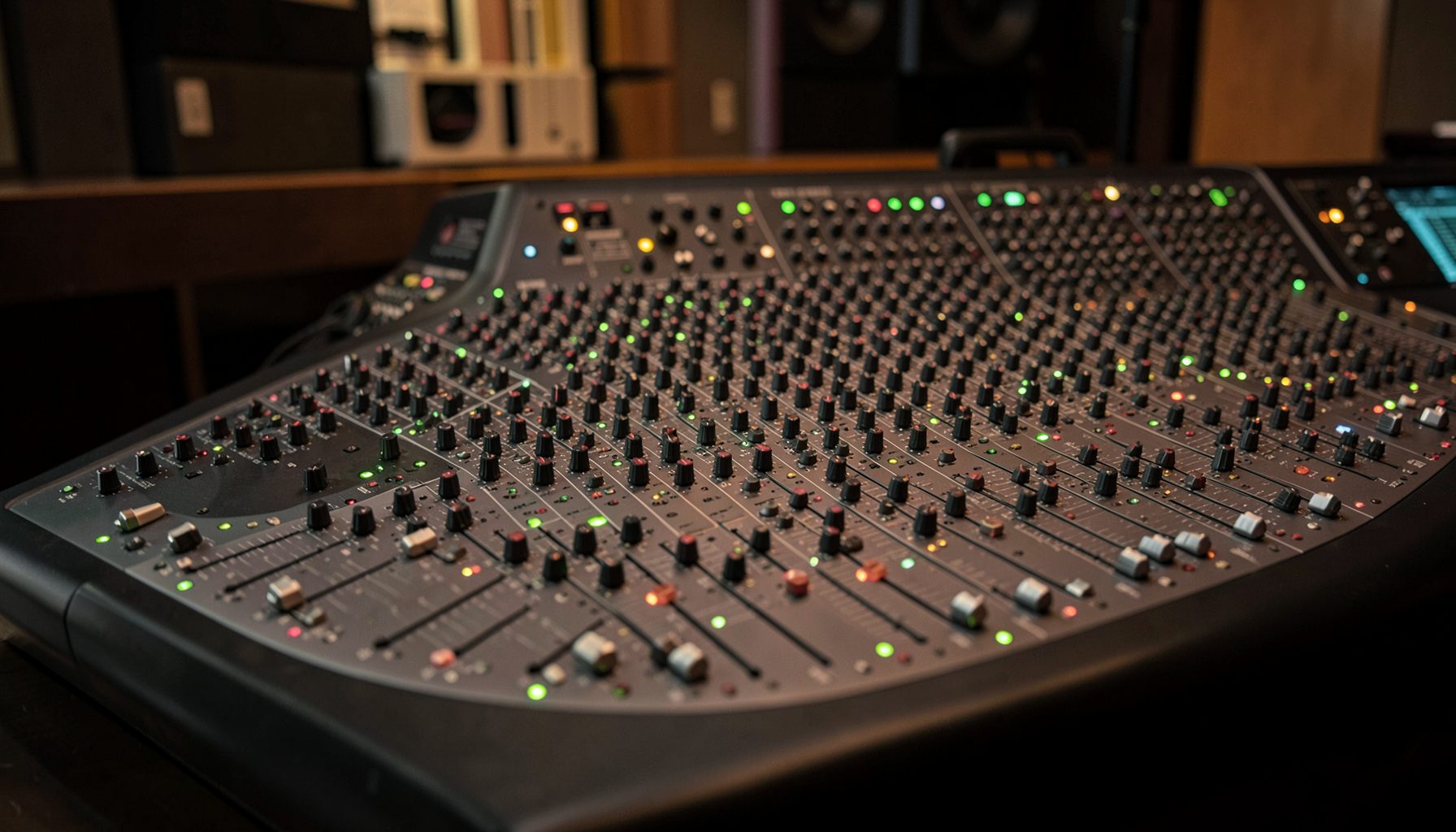
What Defines a Professional Console?
- At least 32 channels with full parametric EQs, FX sends, and compressors on every channel
- Flexible routing for separate control room and artist monitor mixes
- Inline architecture allowing two completely different mixes simultaneously
- Modern high-end consoles also function as full DAW controllers
- Typically priced from $50,000 and up — these are serious studio investments
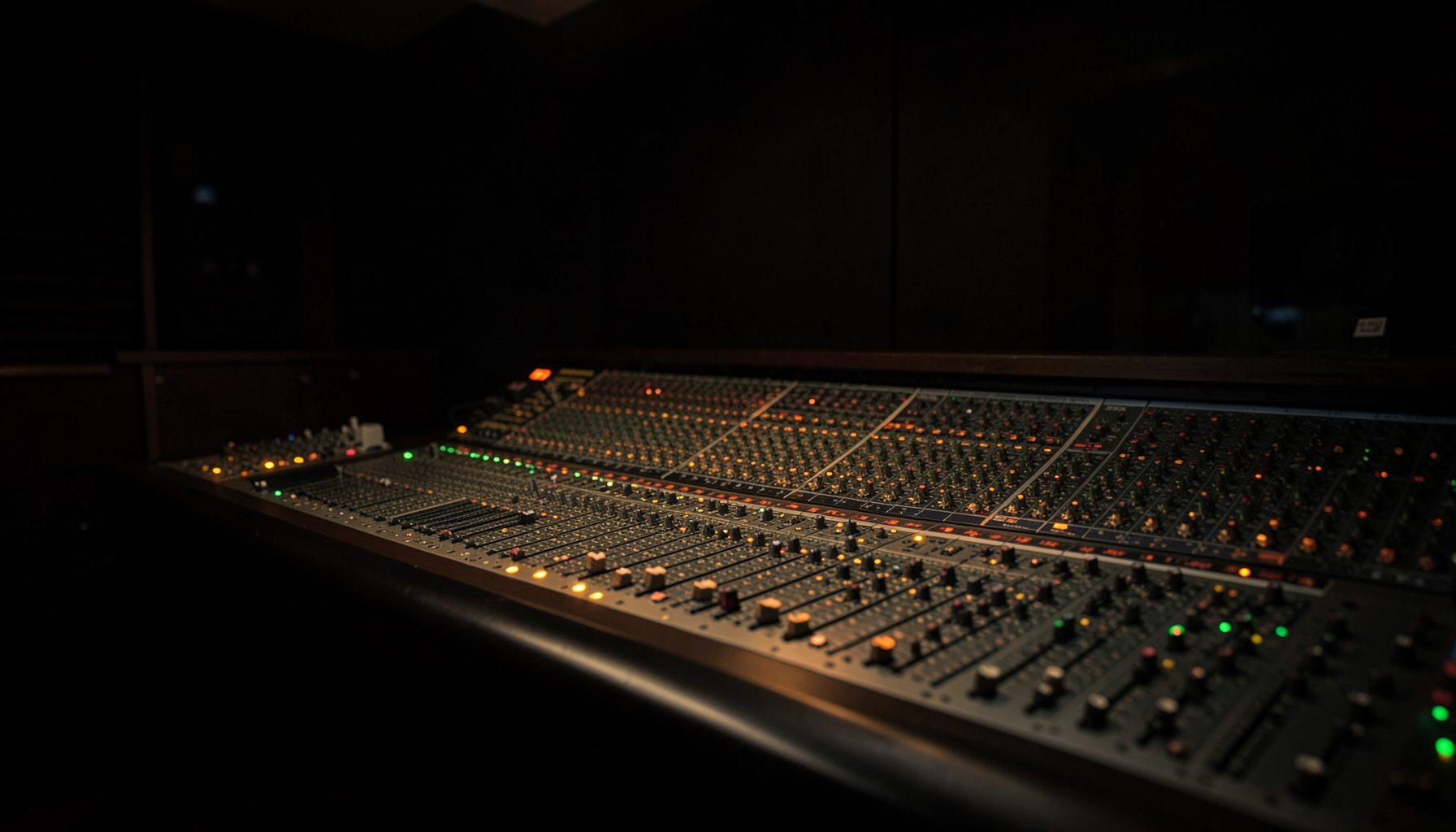
The Makers Behind the Sound
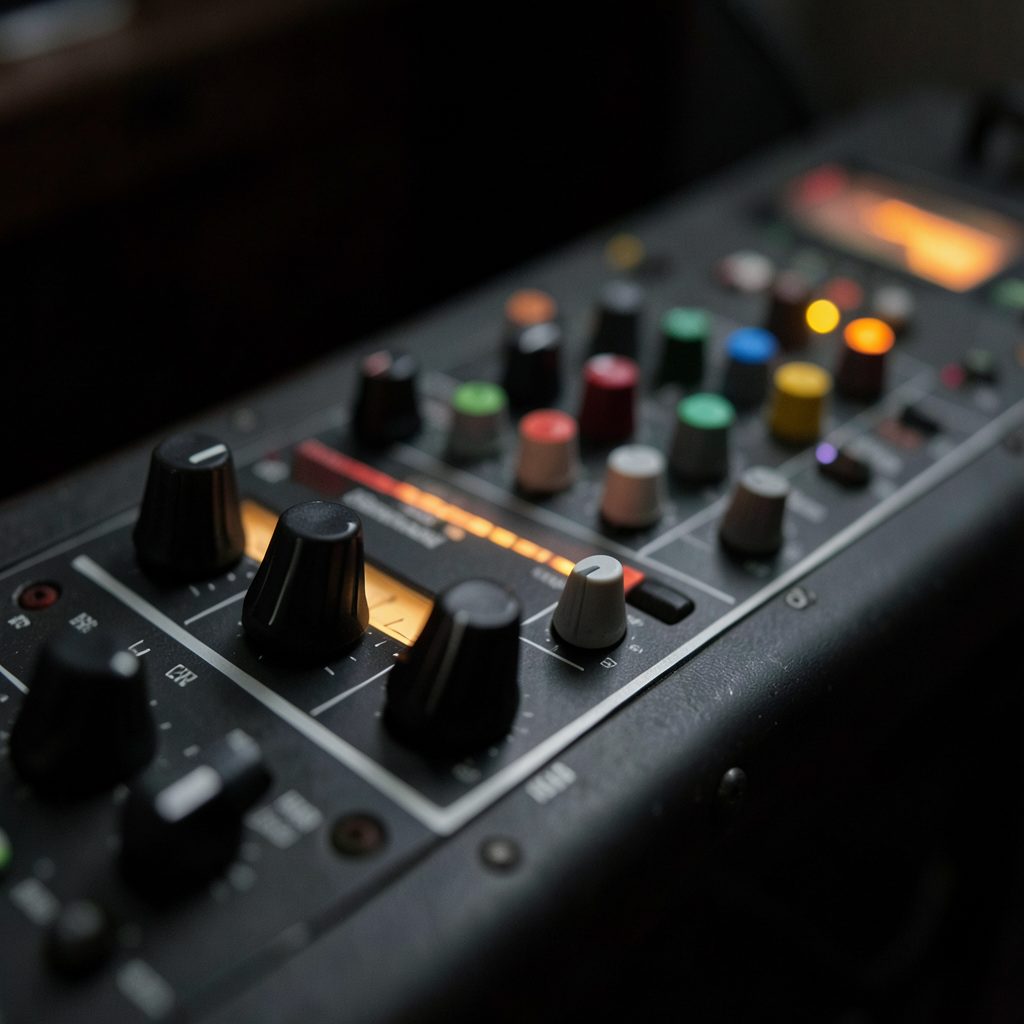
Solid State Logic
Founded 1969 by Colin Sanders
From pipe-organ control systems to the legendary SL4000 series, SSL defined the sound of the 1980s with its E/G series consoles, Total Recall, and the iconic stereo bus compressor.
Read More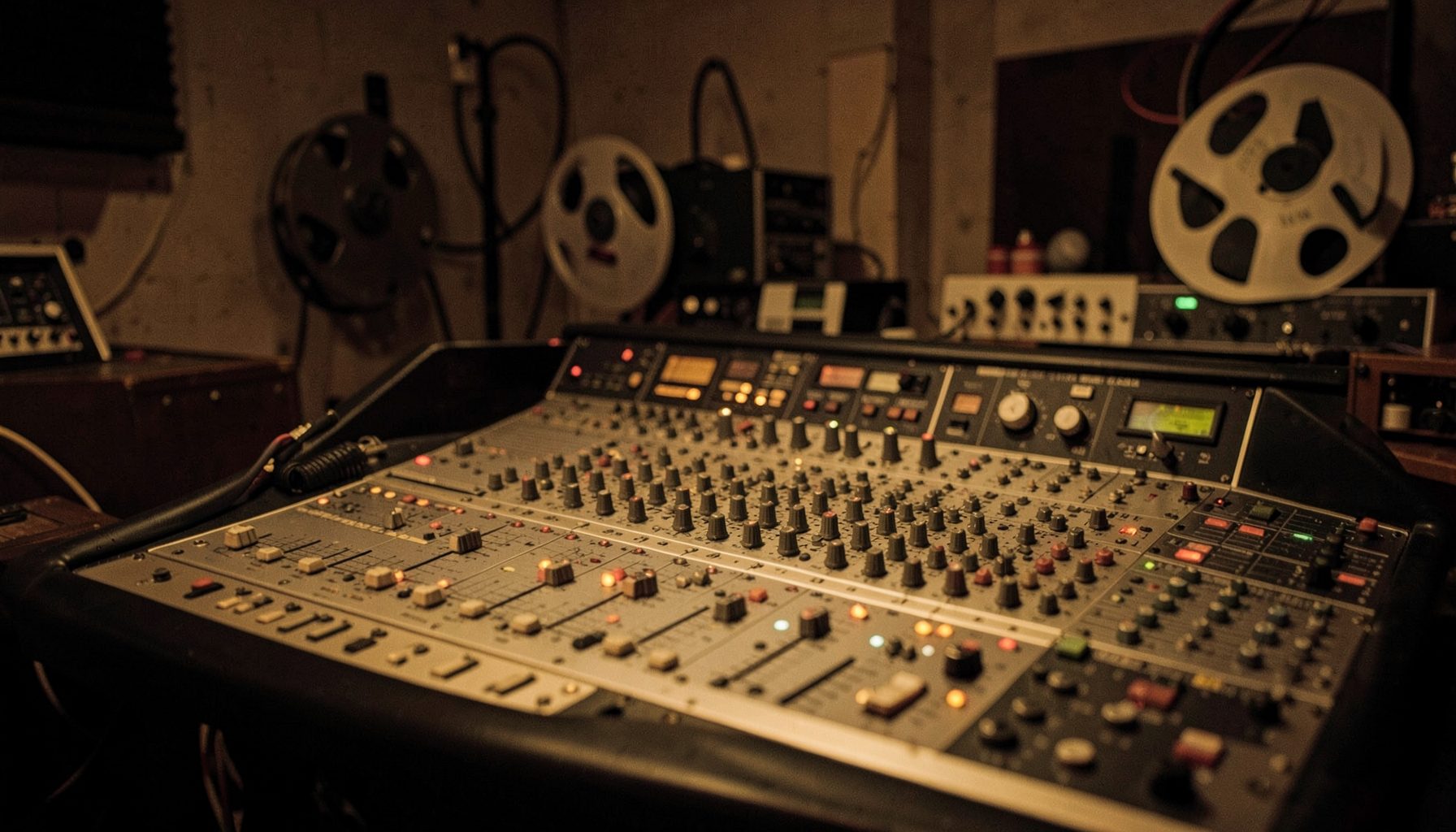
AMS / Neve
Founded 1961 by Rupert Neve
Rupert Neve's cutting-edge designs and high-quality components created the warm "Neve sound" beloved by producers. Home of the 1073 mic pre, NECAM automation, and the world's first digital console.
Read MoreThe Solid State Logic SL4000E was released in the late 1970s and started a revolution. With an incredibly great EQ, a good compressor and sidechain features on each channel, plus a fantastic stereo bus compressor, it helped create the sound of the 1980s.
— Mixing Consoles, published by Joopita Research a.s.b.l.
The history of the modern mixing console is a story of engineering visionaries and the companies they built. From Rupert Neve's pioneering transformer-based circuits to Solid State Logic's iconic inline desks, the evolution of these instruments has been driven by a relentless pursuit of sonic clarity and creative flexibility. Each generation of consoles brought new routing possibilities, more sophisticated EQs, and increasingly powerful signal processing. The Yamaha PM4000 never quite conquered the touring circuit the way Midas did, but its studio-grade routing and automation made it a formidable rival. The Yamaha PM4000 and its Midas touring rivalry Today's offerings carry that legacy forward, blending analog warmth with digital precision. Understanding where these machines came from helps engineers appreciate the craft embedded in every channel strip, and why the great desks of the past remain so highly sought after in studios around the world.
What separates a professional mixing desk from a modest home mixer comes down to depth of control and routing flexibility. True professional consoles offer at least thirty-two channels, each equipped with full parametric equalizers, multiple effects sends, and compressors that can shape every element of a mix independently. Inline architecture allows engineers to run two completely different signal paths simultaneously, giving them the ability to build a full mix while separately constructing a distinct monitor feed for the artist in the control room. This level of control empowers the engineer to serve both the creative process and the technical demands of a session with confidence. Understanding how direct outputs route individual channels to tape or DAW is essential for classic multitrack sessions. See our detailed breakdown in How Console Direct Outputs Feed Multitrack Recording for the full signal flow.
Modern high-end consoles have evolved well beyond their analog roots to become complete command centers for the digital age. Many of today's flagship desks function as full DAW controllers, allowing engineers to bridge the tactile immediacy of a physical mixing surface with the power of modern software. This convergence means the console is no longer just a signal path but a central hub for the entire production workflow. The result is a flexible instrument that honors traditional mixing techniques while embracing contemporary possibilities, giving artists and engineers the freedom to create without compromise and to shape their sound with both precision and intuition.