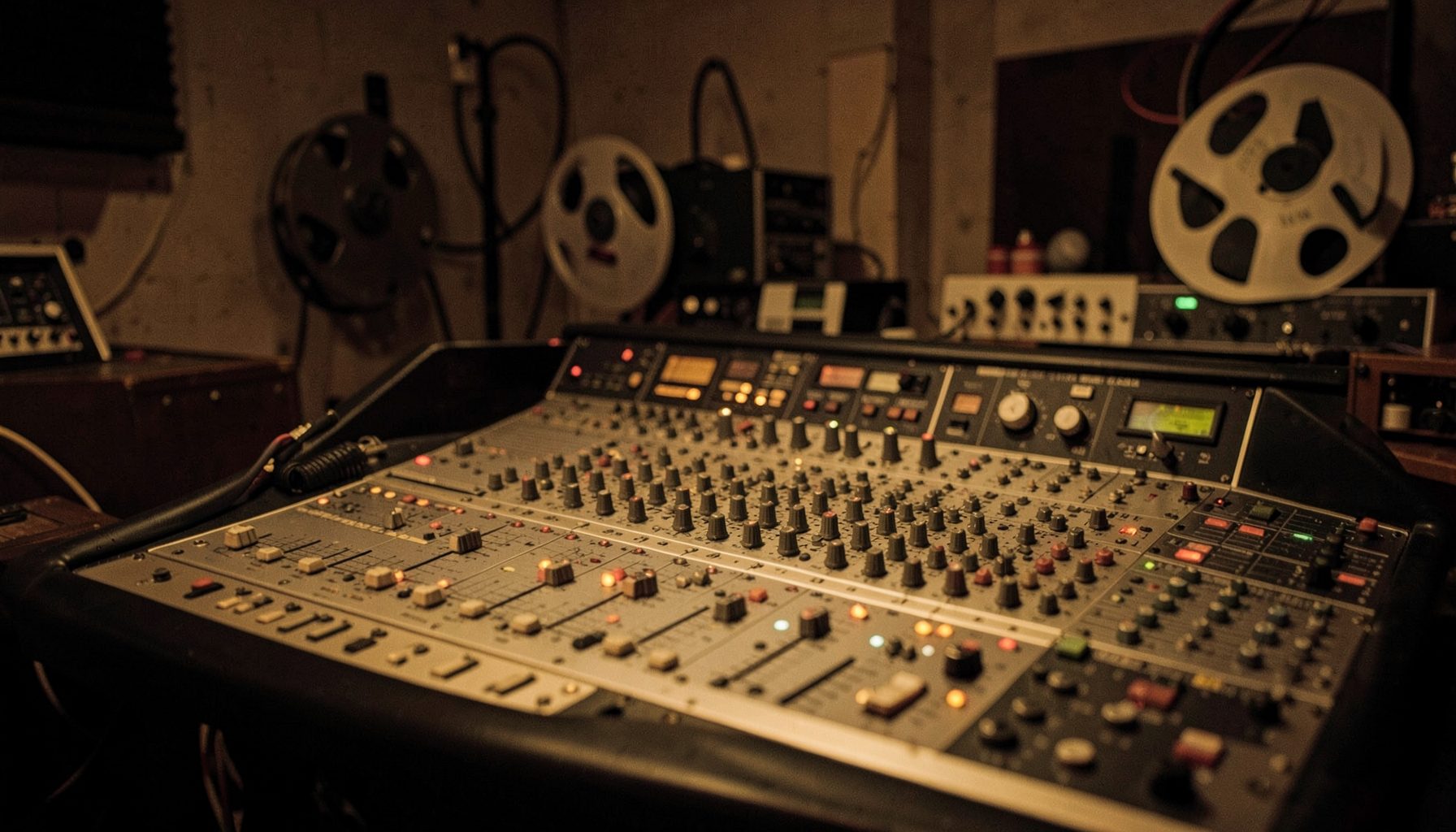
One Microphone, One Take
Bands were usually recorded using just one large membrane microphone. When more microphones were used, their signals were generally merged with very simple mixing gear. The sound went straight to mono, or eventually stereo, tape — leaving very little room for changes after the fact.
Multitrack Arrives
Mixing as we know it today began to take shape once the first multitrack tape machines appeared, typically offering 4 or 8 tracks. Simple mixing consoles emerged for combining these tracks after recording. The Studer J37 4-track recorder became famous for its role in the Beatles' 1967 album Sgt. Pepper's Lonely Hearts Club Band.
The Large-Format Console Emerges
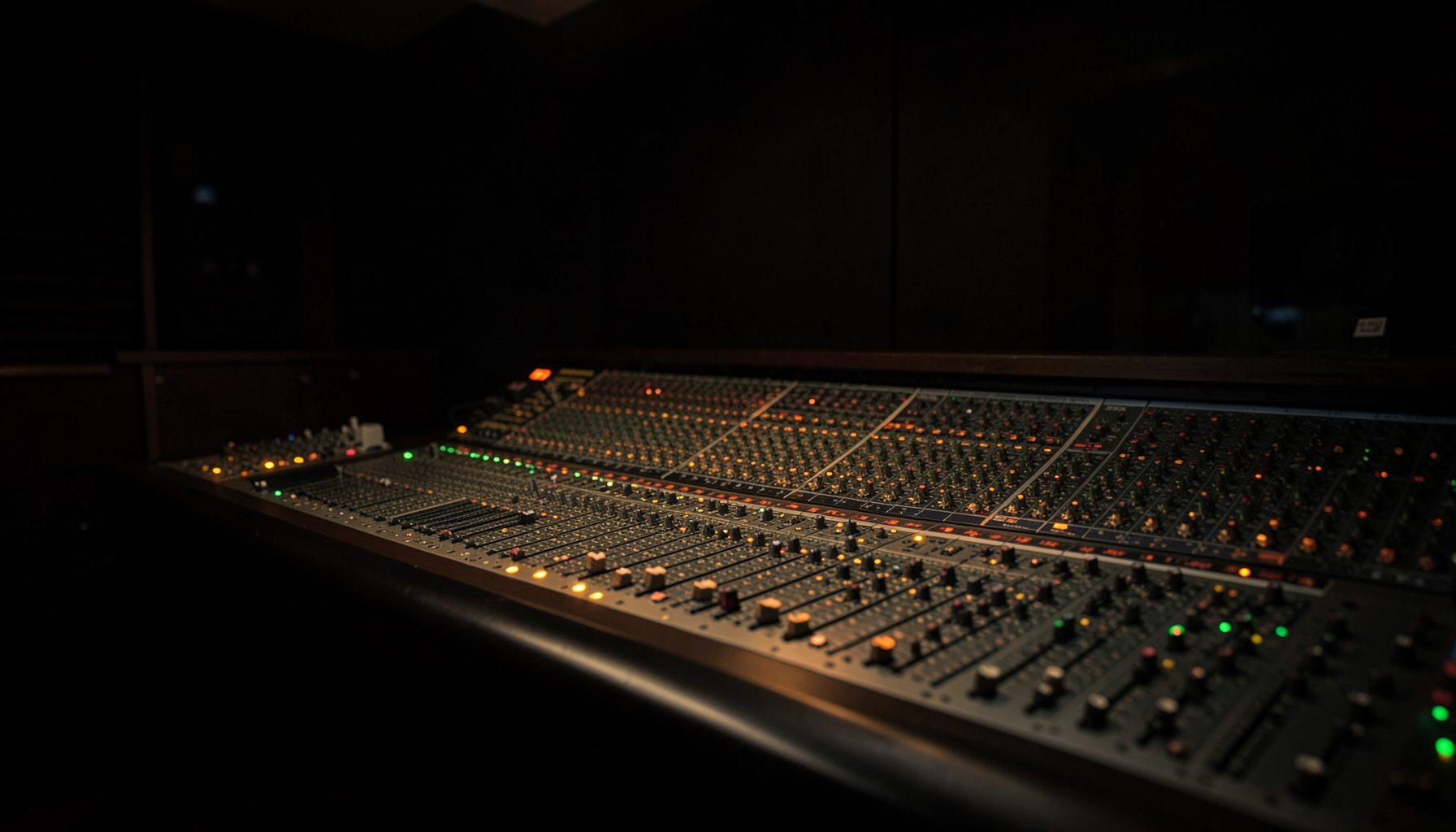
The first large 32-channel consoles appeared, each channel equipped with its own EQ and effects sends, and inline routing became possible for the first time. Automation also took its first steps: Neve developed NECAM, the first computer-controlled moving fader automation system, in the mid-1970s — a breakthrough for handling increasingly complex mixes.
SSL Takes the Lead
The Solid State Logic SL4000 series dominated professional studios, pairing powerful EQ and compression on every channel with an integrated studio computer. This era also saw the first digital consoles begin to emerge alongside the reigning analog designs, setting the stage for decades of parallel development.
Continued Refinement
Console design kept advancing through the decade, with Solid State Logic's SL9000 J/K series carrying the large-format inline tradition forward as studios demanded ever more channels, automation depth, and routing flexibility.
Analog Meets the DAW
High-end consoles increasingly integrate DAW control alongside their analog circuits, letting engineers combine the tactile feel of a large-format desk with the flexibility of computer-based production.